Summary
Agentic AI in procurement is getting a lot of attention because enterprises want procurement operations that move faster and require less manual coordination. But most organizations are still dealing with disconnected workflows, approval-heavy processes, scattered supplier information, and operational gaps that AI alone cannot fix. Before enterprises can scale enterprise procurement AI properly, they first need procurement environments that are more connected, visible, and operationally stable.
Introduction
- McKinsey found that while 78% of organizations use AI in at least one business function, only a small percentage have scaled AI successfully across enterprise-wide operations due to workflow, governance, and data challenges.
- A 2025 ProcureCon CPO study showed that almost 9 out of 10 procurement leaders are either exploring AI agents or already testing them, but most companies are still at an early stage and have not fully integrated them into daily procurement operations.
- According to JAGGAER’s 2025 AI in procurement report, generative AI is already being used regularly by procurement executives, but only a very small number of organizations have managed to scale AI adoption across procurement teams successfully.
- Research from Ardent Partners found that although most procurement leaders believe AI will completely change procurement in the future, only a small percentage of enterprises have actually embedded AI deeply into their Source-to-Pay systems so far.
There is a lot of excitement around agentic AI in procurement right now. Procurement teams are increasingly being introduced to AI systems that can assist with supplier evaluation, manage sourcing activities, speed up approvals, and reduce the amount of repetitive work involved in day-to-day procurement operations.
It sounds impressive and honestly, parts of it are already becoming real. But once enterprises move beyond demos and start thinking about implementation, things become less straightforward.
Most enterprise procurement operations are still built around approvals, compliance checks, supplier governance, finance validation, ERP dependencies, and operational controls that have evolved over years. Procurement decisions usually move across multiple departments before anything actually gets approved.
That is why many procurement leaders are interested in AI-driven procurement while still feeling cautious about fully autonomous procurement environments.
The hesitation is not really about AI capability anymore. It is more about operational readiness.
Why Agentic AI in Procurement Feels Different From Traditional Procurement Automation
A lot of enterprises already use procurement automation today. Approval routing, invoice processing, procurement dashboards, and supplier portals are already part of modern procurement operations.
But agentic AI in procurement helps to change the entire conversation as AI is no longer just automating fixed steps, as it has started participating in operational decision-making.
That changes the level of enterprise risk completely.
Traditional Procurement Automation Follows Predefined Workflows
Most procurement process automation systems work within fixed operational rules.
A purchase request gets routed to a manager. An invoice gets matched against procurement records. A sourcing workflow follows predefined approval stages. The automation supports the process, but the process itself stays predictable.
Enterprises have become comfortable with this as the operational visibility remains extremely clear.
Agentic AI Introduces Adaptive Decision-Making
Agentic AI behaves differently because it responds dynamically inside procurement operations.
An AI system may:
- Prioritize suppliers
- Identify sourcing risks
- Recommend procurement actions
- Reroute workflows
- Flag procurement anomalies
- Suggest operational decisions
This is where procurement leaders start becoming careful.
Once AI moves from “supporting workflows” to “acting inside workflows,” enterprises immediately begin thinking about governance, accountability, and operational control.
Why Most Enterprises Are Still Hesitant About Enterprise Procurement AI
Most enterprises are not rejecting AI. In fact, many procurement teams actively want smarter procurement systems because operational pressure inside procurement keeps increasing every year.
The hesitation usually comes from the environment surrounding the AI, not the AI itself.
Procurement Operations Are Still Operationally Fragmented
This is one of the biggest realities enterprises are dealing with today.
Procurement workflows often move across:
- ERP systems
- Spreadsheets
- Sourcing tools
- Finance platforms
- Contracts
- Email chains
A procurement request may begin inside one platform, but approvals happen elsewhere. Supplier information may exist in multiple versions across different teams. Procurement visibility becomes difficult long before AI enters the process.
This creates one of the biggest AI procurement challenges for enterprises.
AI Systems Still Depend Heavily on Procurement Data Management
AI systems can process information quickly, but they still depend on the quality of procurement data available to them. If procurement data management is inconsistent, disconnected, or outdated, AI-generated procurement insights become unreliable.
For example, an AI system may recommend a supplier based on incomplete sourcing history because supplier records are spread across disconnected systems. Procurement teams then lose confidence in the AI recommendations completely.
That is why enterprises keep talking about AI readiness in enterprises before scaling enterprise procurement AI more aggressively.
| Procurement Reality Inside Enterprises | Why It Slows Agentic AI in Procurement |
| Multiple disconnected procurement systems | AI visibility becomes incomplete |
| Manual approval chains | Procurement workflow optimization slows down |
| Procurement data inconsistencies | AI recommendations become less reliable |
| Compliance-heavy sourcing operations | Autonomous decisions create operational risk |
| Different procurement processes across departments | Enterprise AI Adoption becomes harder |
| Limited operational traceability | AI governance becomes difficult |
These are practical operational problems, not just technical ones.
AI Governance in Procurement Systems Is Becoming a Bigger Discussion
Most procurement leaders are comfortable with AI-generated recommendations. What makes enterprises pause is the idea of AI systems acting independently without enough visibility into how decisions are being made.
This is why AI governance and compliance discussions are growing quickly across procurement teams.
Enterprises Need Traceability Before Full Autonomy
Procurement operations affect budgets, contracts, suppliers, finance workflows, and operational continuity at the same time.
Because of this, procurement teams want answers to questions like:
- Why was this supplier recommended?
- What data influenced this procurement decision?
- Can procurement teams review AI-generated actions?
- What happens if compliance requirements are missed?
- Who remains accountable when AI triggers operational workflows?
Without strong governance, even advanced AI procurement solutions become difficult to scale confidently.
Human Oversight is Still Important in Procurement
This is one area where enterprise procurement differs from consumer AI environments.
Procurement leaders still want visibility into:
- Sourcing decisions
- Approval routing
- Supplier evaluation
- Compliance validation
- Procurement risks
That is why many enterprises currently prefer controlled procurement intelligence instead of fully autonomous procurement systems.
What Enterprise-Ready Agentic AI in Procurement Actually Looks Like
A lot of AI conversations focus on autonomy. Enterprise procurement teams are focusing more on operational reliability. That difference matters.
AI Works Better Inside Connected Procurement Environments
Enterprises successfully scaling intelligent procurement systems usually focus on operational structure first.
Before introducing deeper procurement automation, they improve:
- Sourcing visibility
- Supplier intelligence
- Procurement data management
- Workflow consistency
- Operational visibility
- Procurement governance
Once procurement environments become more connected, AI systems start producing more reliable operational outcomes.
Cognitive Procurement Still Needs Operational Controls
Cognitive procurement systems can process sourcing information much faster than manual procurement workflows. But enterprises still need oversight around procurement actions.
For example, AI may help:
- Compare supplier quotations
- Identify sourcing delays
- Improve procurement analytics
- Support AI-enabled sourcing
- Detect procurement anomalies
But procurement teams still want visibility into final operational decisions.
That is why most enterprises are moving toward AI-assisted procurement operations instead of fully independent procurement environments right now.
How ProcureSignal Helps Enterprises Prepare for Agentic AI in Procurement
ProcureSignal helps enterprises improve procurement readiness before scaling deeper AI-driven procurement operations. Instead of pushing enterprises directly into fully autonomous procurement workflows, the platform focuses on helping procurement teams build more stable and connected procurement operations first.
Procurement Workflows Stay Connected Inside One Environment
Many procurement delays happen because workflows move across disconnected systems and communication channels.
ProcureSignal helps procurement teams centralize procurement requests, approvals, sourcing activity, and supplier coordination inside one operational environment instead of spreading them across multiple tools.
This improves procurement visibility significantly.
Supplier Intelligence Becomes Easier to Manage
Supplier information often becomes difficult to track because procurement teams maintain vendor records across different systems.
ProcureSignal helps connect:
- Supplier activity
- Quotation history
- Sourcing records
- Procurement performance
- Vendor interactions
inside one connected procurement workflow.
This improves AI-powered vendor management while reducing operational confusion.
RFQ Handling Becomes Less Manual
One of the most time-consuming procurement activities is quotation comparison.
Suppliers send quotations through:
- PDFs
- Spreadsheets
- Email attachments
- Scanned documents
ProcureSignal helps procurement teams process and organize sourcing information more efficiently so vendor comparison becomes faster and easier to manage operationally.
This supports procurement efficiency with AI without removing procurement visibility completely.
Procurement Approvals Remain Visible and Traceable
ProcureSignal supports procurement process automation while still allowing procurement teams to track workflow movement clearly.
Approvals remain visible across procurement stages, which helps enterprises improve operational governance while scaling procurement automation gradually.
Procurement Analytics Remain Connected To Operations
Instead of procurement reporting being spread across disconnected systems, procurement teams can track:
- Sourcing activity
- Procurement bottlenecks
- Operational delays
- Supplier performance
- Procurement visibility
- Workflow movement
through centralized procurement dashboards.
This helps enterprises improve enterprise AI strategy gradually without disrupting existing procurement operations.
Conclusion
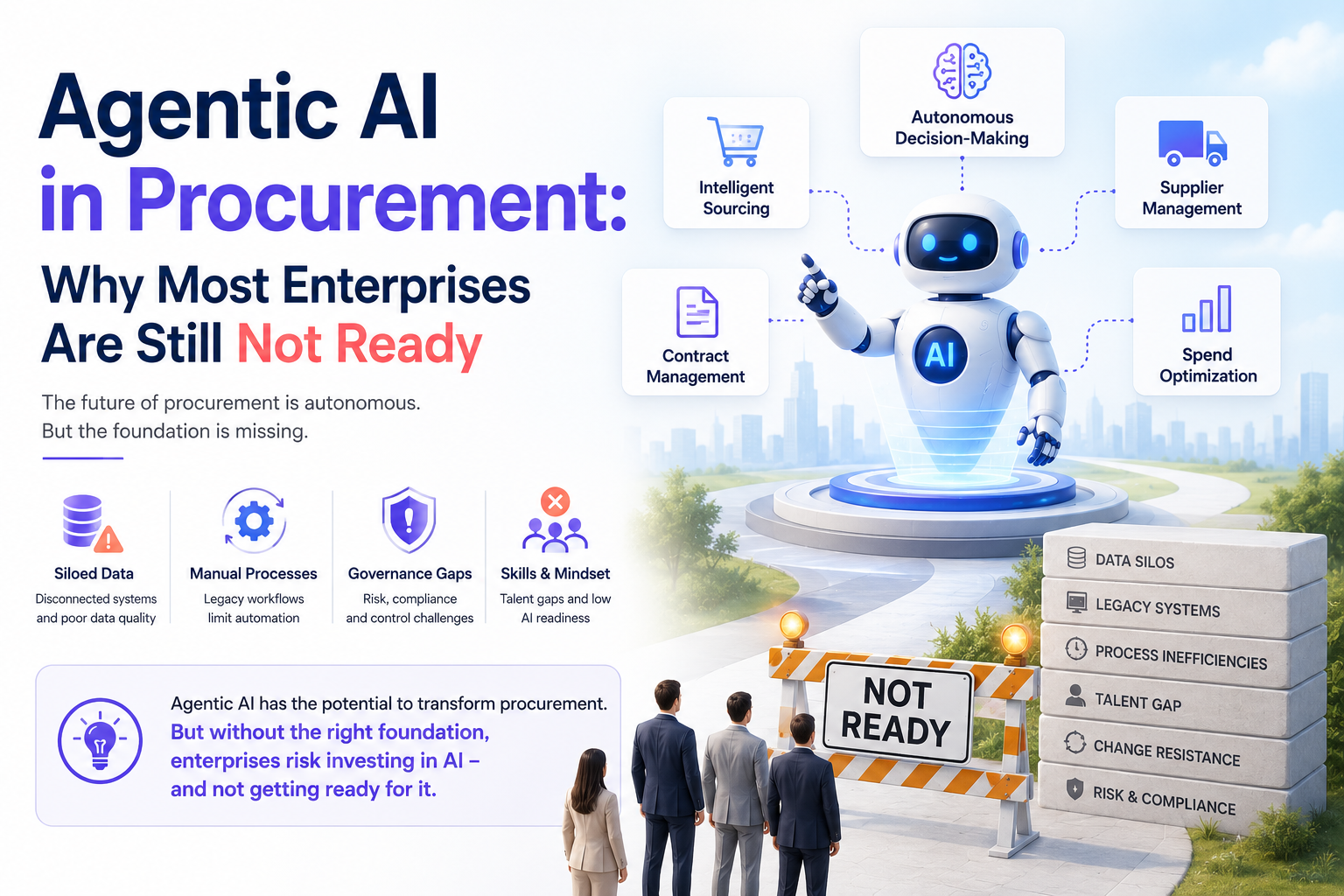
Agentic AI in procurement is growing quickly, but most enterprises are still dealing with disconnected procurement environments, fragmented procurement data management, operational visibility gaps, and approval-heavy workflows.
That is why many organizations are still not fully ready for autonomous procurement AI.
The enterprises moving successfully toward AI-driven procurement are usually not the ones chasing AI hype aggressively. They are the ones improving procurement visibility, operational consistency, supplier intelligence, and governance before scaling deeper procurement automation.
ProcureSignal helps enterprises build that operational foundation by connecting procurement workflows, sourcing operations, approvals, supplier intelligence, and procurement analytics into one environment.
As procurement operations continue evolving, enterprises that balance AI innovation with operational readiness will be in a much stronger position to scale enterprise procurement AI successfully.
FAQs
Why Are Enterprises Struggling With Agentic AI in Procurement Adoption?
Most enterprises struggle with agentic AI in procurement adoption because procurement operations still depend on fragmented procurement data management, disconnected workflows, manual approvals, and operational governance processes that AI systems cannot navigate independently yet.
What Are the Biggest AI Procurement Challenges for Enterprises?
The biggest AI procurement challenges include inconsistent procurement data, weak AI governance, disconnected sourcing workflows, limited operational visibility, compliance-heavy procurement processes, and difficulties scaling enterprise AI adoption across procurement operations.
How Can Enterprises Improve AI Readiness in Procurement?
Enterprises can improve AI readiness in enterprises by strengthening procurement data management, centralizing supplier intelligence, simplifying procurement workflows, improving operational visibility, and creating stronger governance controls before scaling AI-driven procurement operations.
Why Does AI Governance Matter in Procurement Systems?
AI governance in procurement systems matters because procurement decisions affect budgets, suppliers, compliance requirements, and operational continuity. Enterprises need visibility, accountability, and traceability before allowing AI systems to participate deeply in procurement workflows.
What Does Enterprise-Ready Agentic AI in Procurement Look Like?
Enterprise-ready agentic AI in procurement is less about replacing procurement teams completely and more about helping them work smarter through AI-assisted workflows, better supplier visibility, connected procurement processes, and automation that still keeps human decision-making involved.